
You know he is toxic. You know he lied, cheated with the affair partner, and broke something inside you. And still, you catch yourself checking his social media. You wait for a message that may never come. You wonder, “why can’t I leave my cheating husband?” It feels humiliating. It feels compulsive. It feels like addiction.
That’s because it is. You are not weak. You are experiencing the most common trauma bond symptoms.
1. The Biological Hijack
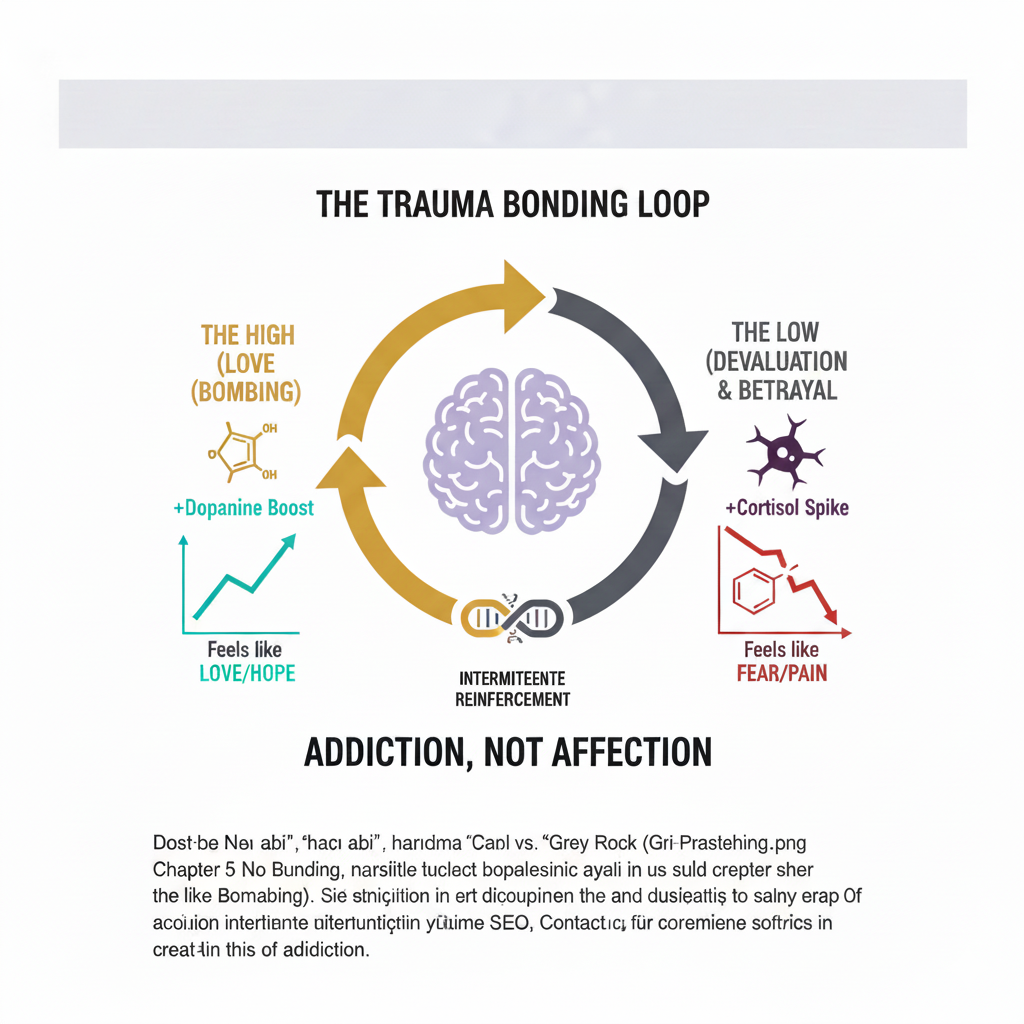
A narcissist doesn’t just manipulate emotions; he hijacks your nervous system. The relationship runs on a cycle of intense highs and devastating lows. When he is warm, attentive, or suddenly loving—what’s often called “love bombing”—your brain releases dopamine. Dopamine is not about love; it’s about reward and anticipation.
Then comes the drop. The cruelty, the silence, the betrayal. Your body floods with cortisol, the stress hormone. Your chest tightens. You live on edge. This back-and-forth rewires your brain. This is why trauma bonding is so physical; walking away doesn’t just feel like a breakup—it feels like chemical withdrawal.
2. Intermittent Reinforcement
If he were cruel 100% of the time, you would eventually detach. But he isn’t. Just when you reach the point of giving up, he offers a “crumb” of kindness. An apology that almost sounds real. A touch. A memory of who he used to be.
That unpredictability is the hook. Intermittent reinforcement is the same mechanism used in gambling addiction. You stay because you never know when the next reward is coming. Your brain learns to ignore the long stretches of pain in exchange for a brief, shallow sense of relief.
3. The “Stockholm Syndrome” of Infidelity
During the affair, your wayward spouse may have shifted the dynamic completely. Instead of him repairing the damage, you found yourself trying to “earn” his attention. To be calmer. More understanding.
The person who hurt you became the person you chased. This is a survival response. When the same person causes the wound and offers the comfort, the attachment deepens. You start to see your abuser as your only source of safety, even as he continues to harm you.
Conclusion
Breaking a trauma bond begins with a hard truth: what you are feeling is not love. It is a physiological response to abuse. You do not need closure from him. Closure implies mutual understanding, and that was never available. What you are going through is closer to detox than heartbreak.
And like any withdrawal, it hurts because something real was happening in your body—even if the relationship itself was never real.
Did you understand the lies? Now understand the bond. 👉 Read Chapter 4: The Narcissist’s Infidelity Dictionary
Join the Conversation!
Share Your Experience